Replacement parts, overhaul and specialized technical assistance for industrial centrifugal separators, built to the standards of the industry's leading manufacturers.
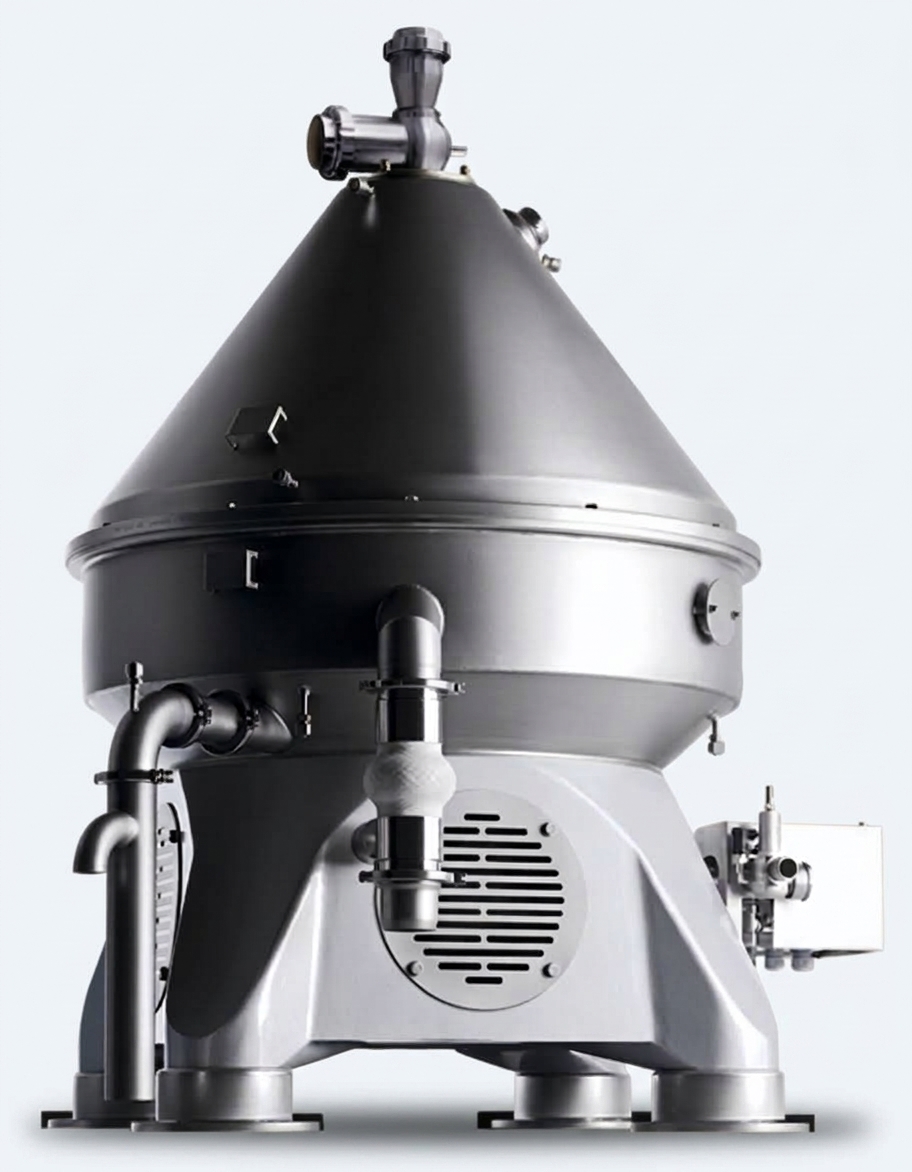
A centrifugal separator is a high-speed rotating machine designed to continuously separate phases of different densities in a liquid mixture — whether liquid-liquid (such as oil and water), liquid-liquid-solid, or the clarification of fine solids suspended in a liquid.
Its operating principle is based on centrifugal acceleration: while gravity would separate these phases slowly (and often incompletely), the separator's rotating bowl generates a force hundreds or thousands of times greater than gravity, dramatically speeding up the process. Inside the bowl, a stack of conical discs (disc stack) increases the effective separation area, allowing the equipment to process large volumes in a small footprint.
The practical result: cleaner liquids, with lower solids content and higher purity between phases, in continuous production processes — from food and beverage to oil treatment, as well as pharmaceutical, marine and chemical industries.
The main difference between separator models lies in how the retained solids are discharged from the bowl. This is the characteristic that defines the three main types of machine.
The ideal model depends on the solids content, the material's consistency and the process's need for operational continuity.
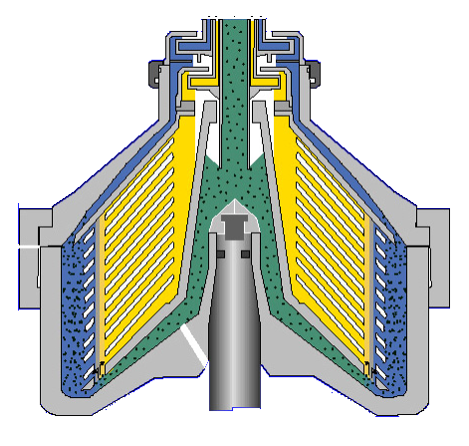
Also called a solid-wall bowl, this is the simplest construction model. The separated solid accumulates at the periphery of the bowl during operation and is not discharged automatically. Once the accumulation capacity is reached, the equipment must be stopped for manual opening and cleaning.
The bowl has no hydraulic opening system or discharge piston — it is a sealed part, of robust construction and with fewer internal moving components.
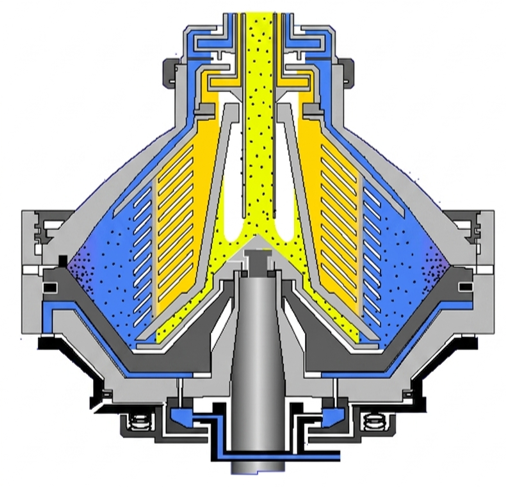
Overcomes the stop-for-cleaning limitation through a periodic bowl-opening system. The bottom of the bowl is movable (sliding piston) and, at programmed intervals or triggered by sensors, opens momentarily to expel the accumulated solids without interrupting operation.
A hydraulic system moves the lower part of the bowl (movable bottom or sliding piston). When it opens, a peripheral slot releases the accumulated solids in a fraction of a second, and the bowl closes again immediately, resuming separation. The discharge can be full or partial, depending on the design and programming.
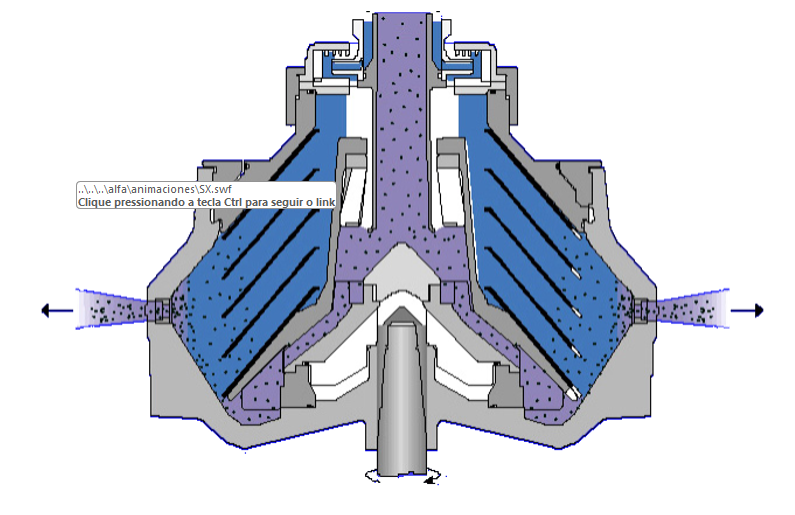
A model developed for processes with high solids concentration, where there is enough volume to ensure continuous discharge of the heavy phase, without interruptions.
Calibrated nozzles are installed around the periphery of the bowl, through which a fraction of the concentrated solid is continuously expelled throughout the operation. The sizing and diameter of the nozzles are defined based on the solids load.
The choice between solid wall, automatic discharge and nozzle is not a matter of which model is "better" or "worse," but of fit to the process: solids content and consistency, need for operational continuity and application-specific characteristics. An accurate technical diagnosis is what ensures the selected separator (or the overhaul of an existing one) delivers the expected performance.
At Centrimotion, you can count on qualified professionals to support you in selecting the ideal technology for your process.
